Binoculars are excellent for watching the total solar eclipse – with utmost precaution
A total solar eclipse is one of nature’s most breathtaking experiences. If the sky is clear, the sun’s corona becomes visible and, for totality only, observers can see it with their naked eyes. It’s a beautiful sight, but there is one way to transform a once-in-a-lifetime moment into something truly unforgettable — magnification.
Before you go any further, know the non-negotiable safety rule: never look at the sun through unfiltered binoculars — only during the brief period of totality (when no direct sunlight is visible). Because binoculars concentrate sunlight, using them without filters outside totality can cause instant and severe eye damage.
Eclipse glasses or solar binoculars are a must-have for the partial phases, either side of totality, but for totality itself, a regular pair of binoculars is the single best upgrade you can make. Here’s why — and what you’ll see through them.
One fact always surprises first-time eclipse-chasers: the sun and moon are tiny in the sky. Both span just half a degree — about the width of your little fingernail held at arm’s length. Even during totality, the corona can look delicate and small without magnification.
Binoculars change everything. They bring the eclipse closer, revealing structure and texture invisible to the naked eye.
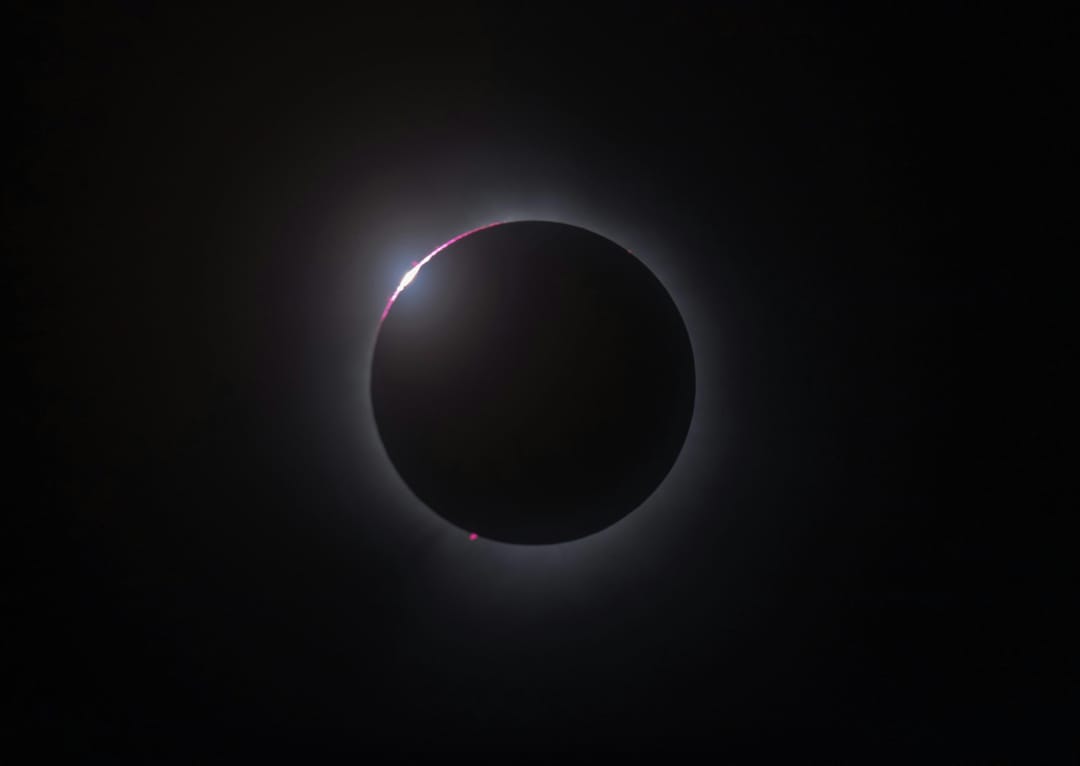
During totality — and only during totality — it is safe to look at the eclipsed sun with the naked eye or through unfiltered binoculars. You’ll see the moon’s silhouette against the sun’s disk, of course, but there are some other sights that you can see during totality through binoculars:
Chromosphere: a pink line at the lunar edge just after totality begins and before it ends — the second layer of the sun’s atmosphere.
Solar corona: streamers and wispy white structure.
Pink prominences: arcs of hydrogen gas looping off the sun's edge.
Without binoculars, you’ll still see the bright halo of the corona, and perhaps some prominences if they’re really large — and your eyesight is good — but binoculars will hugely elevate your view.
For most people, inexpensive 10x42, 10x50 and 12x50 binoculars strike the perfect balance between magnification, brightness and field of view for a total solar eclipse. Do you understand what the numbers mean? The first number — such as 10x — refers to magnification. In this case, the sun will appear 10 times magnified. The second number is the diameter, in millimeters, of the objective lenses on the front of a pair of binoculars. This determines the aperture — how much light gets in, so how bright the image is.
There is always a trade-off with binoculars — the more magnification and aperture, the heavier the binoculars are. The heavier they are, the harder they are to hold still, so the shakier and blurrier the image will be. 10x or 12x magnification provides good detail, while 42mm or 50mm objective lenses produce a bright, high-contrast image. The combination of these numbers makes for a pair of binoculars that are perfect for an eclipse without being too heavy.
There is one way to cheat. Image-stabilized models use electronic actuators to compensate for movement, creating an exceptionally steady view and ensuring the eclipsed sun stays completely sharp. The best example for an eclipse — for any astronomy — is the Canon 10x42L IS WP, but it is expensive.
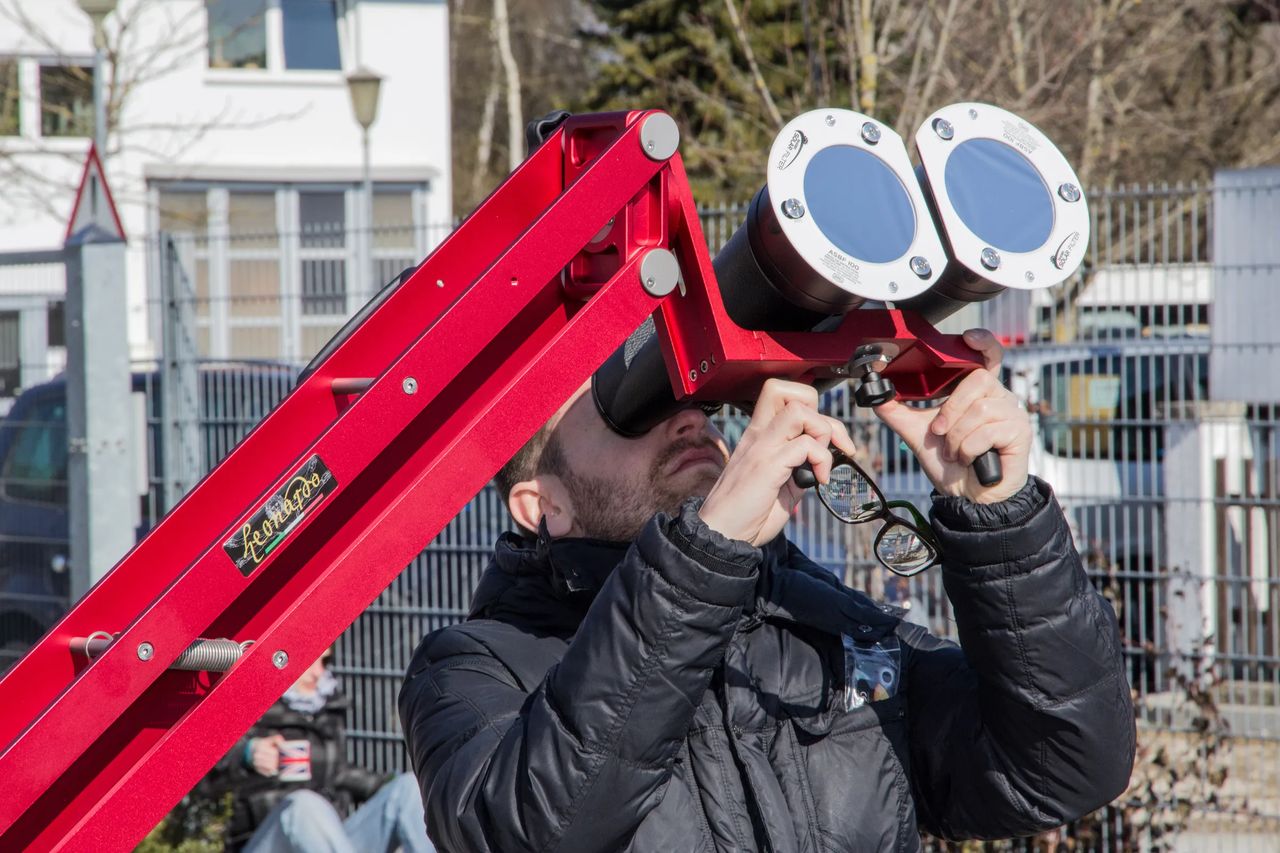
If you want to get a close-up of the partial phases of the eclipse — or look at the sunspots on the sun at any time — only a pair of solar binoculars will do. Dedicated solar binoculars, such as the Celestron EclipSmart 10x42, come with permanently attached certified filters, eliminating the risk of user error. Other options for attaching to your existing binoculars include a Daystar solar filter and, for making your own solar filters, Baader Planetarium AstroSolar Safety Film. During totality — when the sun is 100% covered — remove the filters.
You’ll know totality has begun when the last bright bead of sunlight (the “diamond ring”) disappears, and the corona appears. That’s when you can swap from filters/solar binoculars to regular binoculars for a jaw-dropping view of the solar corona. Replace the filters, or put down your binoculars, before any direct sunlight reappears.
Whatever you go for, borrow or buy them well before the eclipse and practice. For regular binoculars, learn how to put them on the moon and focus them quickly. For solar binoculars, practice finding the sun — it’s not as easy as it seems because solar filters block all but 0.001% of the sun's light, creating a completely dark sky.
When a total solar eclipse arrives in your country for the first time in generations, it pays to be ready. With the right equipment and a little practice, you’ll be able to take in not just the spectacle, but the fine details that make it truly unforgettable.

Jamie Carter is the author of Complete Guide to the Total Solar Eclipse 2026, The Eclipse Effect and When Is The Next Eclipse? A traveler’s guide to total solar eclipses 2026-2034