Látrabjarg is deeply appealing to eclipse chasers, but also one of the most misunderstood locations on the path.
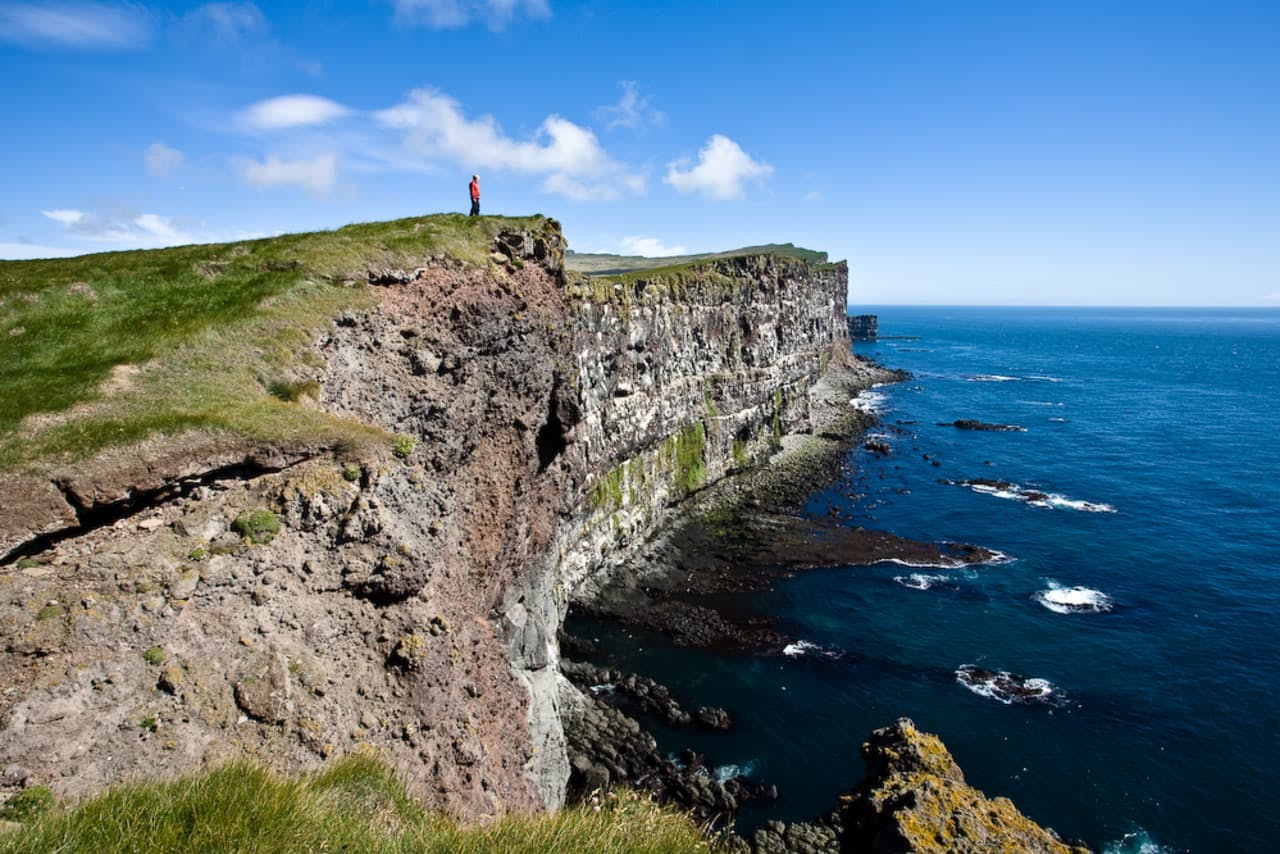
At the far western edge of Iceland, where sheer cliffs plunge into the North Atlantic, Látrabjarg Nature Reserve offers one of the most dramatic vantage points for the total solar eclipse of August 12, 2026. This 14-kilometer-long escarpment — the largest bird cliff in Europe — combines raw geological spectacle with one crucial advantage: among the longest durations of totality anywhere in the country — 2 minutes, 13.4 seconds starting at 5:44 p.m. GMT.
That combination makes it deeply appealing to eclipse chasers. It also makes it one of the most misunderstood locations on the path.
Látrabjarg is not a convenient viewing site. It is remote, exposed, tightly managed and, at times, hazardous. Those planning to go need to think less like tourists and more like expedition participants.
“There are no buildings to shelter in. There will not be any services — no food, no water. So people who come to Látrabjarg will need to prepare so they can survive for 24 hours,” said Kristín Ósk Jónasdóttir of the Nature Conservation Agency in Iceland.
That single point — total self-sufficiency — underpins everything about viewing the eclipse at Látrabjarg.
Arriving in the Westfjords unprepared can quickly become dangerous. Even in August, the region can have cold winds, mist, and rapidly changing weather. Visitors will need to bring food, water, warm clothing and basic supplies, but not just for a few hours. The geography and road network are such that delays are not just possible but likely if anything goes wrong.
“If there’s an incident, everyone may be stuck at Látrabjarg until it’s been cleared up,” said Jónasdóttir. “That’s why we’re telling people to have everything with you for 24 hours — water, food, blankets, toilet paper, everything.”
For that reason, even something as simple as sitting comfortably becomes part of eclipse planning.
“In my backpack, I always have something to lie on the ground to sit on,” said Jónasdóttir. She also advises bringing extra layers, such as mittens, hats and woolly jumpers. “I would bring a blanket — and definitely have waterproofs on with wind protection. People need to prepare themselves to be outside for a long time.”
If the cliffs themselves define the visual drama of Látrabjarg, the road defines the reality of getting there.
Route 612, known as Örlygshafnarvegur, is the main access road leading to the Látrabjarg. The final approach is a 45–50 kilometer stretch of narrow, unpaved gravel road, winding along exposed terrain high above the coastline. On eclipse day, this remote route will operate under strict traffic control.
“The police will stop everyone coming to Látrabjarg,” said Jónasdóttir. That’s likely to happen where Örlygshafnarvegur joins Route 62, known as Barðastrandarvegur. “It will be a one-way road during the eclipse, so you can only drive towards Látrabjarg in the morning until the afternoon, and then back in the afternoon after the eclipse,” said Jónasdóttir.
This one-way system is not optional — it is essential given the nature of the road. There will be no exceptions.
“It’s just gravel, it’s narrow, and there’s a steep drop to the coastline, so it’s not a road you want to be on in the traffic,” said Jónasdóttir. “That’s why one way is absolutely necessary.” Not surprisingly, nobody will be allowed to park the car on the road. Authorities are concerned about what would happen in the event of an incident, such as a medical emergency. Local emergency services in the Westfjords have extremely limited capacity. “We have to make sure people will drive slowly, be extra careful. We just can’t have an accident,” said Jónasdóttir.
Even if you make it to the end of that road and get to Látrabjarg, there is another constraint: space. In Látrabjarg itself, there will be room for 120 vehicles — and no more. The next closest parking area will be in Breiðavík, around 13 kilometers before the road reaches Látrabjarg (see below for details).
Beyond logistics, Látrabjarg is also a protected environment, which imposes strict restrictions. “It’s very important for people to know that staying the night in Látrabjarg is not allowed,” said Jónasdóttir. “So even though you have a camper, you cannot park in the parking lot and expect to be able to stay there the night before — if anyone arrives in the night, they will be told to leave.” Enforcement will be active throughout the event.
Drones are also prohibited, both for safety and to protect wildlife. However, in terms of protecting wildlife, the timing of the total solar eclipse couldn’t be better. Although Látrabjarg is famous for its seabird colonies — including puffins, razorbills and guillemots — the eclipse falls late in the breeding season. “Most of the birdlife will have left, which I am relieved about because we will not disturb them,” said Jónasdóttir.
Given all these constraints, an increasingly important question is whether Látrabjarg itself is the best place to observe the eclipse.
Nearby Breiðavík — a fabulous beach just 13 kilometers back from Látrabjarg on the Örlygshafnarvegur road — offers a strikingly similar eclipse experience with far fewer logistical challenges. The duration of totality differs by only a few seconds, yet the setting includes easier access, space for far more visitors and the possibility of accommodation.
“Breiðavík is absolutely a beautiful place to stay,” said Jónasdóttir. It’s home to a small hotel — booked up long ago — and a small campground that may be extended for the eclipse. Either way, it’s a destination in itself. “The landowner is telling people, if you stay here, just be here, just don’t try to go any further.” At the southern end of Breiðavík Beach, totality will last 2 minutes 11.4 seconds, two seconds shorter than at Látrabjarg.
Local authorities are also encouraging visitors to base themselves in nearby communities such as Patreksfjörður (2 minutes 5 seconds), Tálknafjörður (2 minutes) and Bíldudalur (1 minute 52 seconds), where services and infrastructure are in place.
Látrabjarg will remain one of the most extraordinary eclipse locations on Earth — a place where totality unfolds at the edge of a continent, with nothing but ocean to the west. But that experience comes at a cost: limited access, strict controls and a requirement for careful planning.
For those prepared to meet those challenges, it will be unforgettable. For many others, the smarter choice may be to step back slightly — and enjoy the same celestial event with far fewer risks.
Jamie Carter is the author of Complete Guide to the Total Solar Eclipse 2026, The Eclipse Effect and When Is The Next Eclipse? A traveler’s guide to total solar eclipses 2026-2034